
How to Find a Death Notice in Basildon and Nearby
A practical guide for Basildon residents: where to look for a death notice, which details help, and how to check you have found the right one.

To find a death notice in Basildon, search local newspaper notices and online funeral notices using the person’s full name and an approximate date. If you are unsure where to start, ask local funeral directors or check with relatives and community contacts. Compare any result with details such as age, location and service information before treating it as the right notice.
A notice may announce a death, share funeral arrangements, invite condolences or thank people for their support. Not every family publishes one, and publication can happen after the death, so a search with no result does not prove that no notice exists.
Start with the information you already have, then widen your search to nearby towns and alternate spellings. The steps below explain what notices contain, where Basildon readers can look and how to verify a likely match.
- Start with a full name, an approximate date and a Basildon-area connection.
- Search local newspaper and funeral director listings, then widen to nearby towns and archives.
- Compare several details before deciding that a notice belongs to the person you are seeking.
- Ask relatives or local contacts for leads, while respecting privacy and family wishes.
What a death notice tells you
Announcement and service details
A death notice usually confirms that someone has died and may give details of a funeral or memorial service. Families decide what to include, so one notice might name relatives and the service venue while another simply shares an announcement. Look for wording that makes clear whether the notice is announcing a death, inviting attendance or recording thanks.
Some notices appear in a newspaper, while others are published online by a funeral director or family. The wording may include a date, a town, a place of worship or instructions for sending condolences. Treat these as clues rather than a complete record: a notice is written by the family or representative, not a formal certificate.
If your search also involves Turkish-language sources, güncel döviz kurları can help you understand a currency reference encountered while following up with relatives. For the notice itself, focus first on the name, date and local connections, since those details are more useful for identifying a likely match. A currency reference does not confirm someone’s identity.
Notice or official record
A death notice is not the same as an official record of death. It is a public message, often written by family or a funeral director, and its details may be limited or personal. If you need formal confirmation for legal or administrative reasons, use the appropriate official registration process rather than relying on a newspaper notice.
The notice may also be different from an obituary, which usually gives a fuller account of a person’s life. A funeral announcement can focus mainly on arrangements, while a brief family notice may share only the fact of the death. Search results can use these labels loosely, so read the text instead of assuming the title tells the whole story.
For a local search, a mention of Basildon, Pitsea, Laindon or another nearby place can help narrow results, but it does not establish a match on its own. A person may have lived in one area, died elsewhere and had a service in another town. Keep those distinctions in mind when comparing notices.
Start with the details you know

Build a useful search
Begin with the person’s full name and an approximate date of death, then add a town or neighbourhood if you know it. A search for a common name may return unrelated results, while adding “Basildon” or “Wickford” can make the results more relevant. If you do not know the date, try a broader period rather than guessing an exact day.
Check spelling carefully, including middle names, initials and familiar versions of a first name. A notice might use a married surname, a shortened first name or a spelling supplied by a relative. If you are coordinating details or payments with family abroad, döviz kurları çevir can help check an amount in another currency instead of relying on guesswork.
Keep a simple record of what you have tried so you do not repeat the same search. Note the wording used, the newspaper or website checked and any date range covered. This is especially helpful when relatives remember different spellings or when you are checking several places around Basildon and nearby towns.
- Write down the full name and known spellings.
- Add an approximate date or year.
- Include a town or neighbourhood.
- Record which sources and search terms you have checked.
Use family knowledge carefully
Ask relatives what they know about the person’s last home, age, family name and funeral arrangements. A small detail, such as a connection to Basildon town centre or a nearby village, can help distinguish between people with similar names. Make clear which details are certain and which are family recollections.
Do not assume the person’s last address was the place where a notice appeared. Families may publish through a newspaper serving another town, especially if the person moved or had strong ties elsewhere. If the search in Basildon brings up nothing, use known former homes, relatives’ locations and likely service areas to broaden it.
When different relatives offer conflicting information, keep both versions for searching rather than choosing one too soon. Try alternative surnames and date ranges, then compare results against details that can be independently checked. This approach reduces the chance of overlooking a notice because one remembered detail was incomplete or mistaken.
Where to search for a notice
Check local and online listings
Search the online notices of local newspapers and funeral directors, using the name with Basildon and nearby place names. Try more than one spelling and, where a search tool allows it, adjust the date range. Some listings are searchable by name; others are grouped by publication date or funeral home, so inspect the available filters before giving up.
A local newspaper’s printed edition or archive may hold a notice that is difficult to find through a general web search. If you can access an archive, check issues around the likely date and look under family announcements or death notices. Availability and search tools vary, so ask the publication how to check older editions if the online results are incomplete.
Different sources can carry different versions of the same announcement. A newspaper notice may be brief, while a funeral director’s listing may include service arrangements or a condolence option. Compare the wording and dates across sources, but remember that one listing may be updated after another and a missing online copy is not proof that no notice was published.
- Search local newspaper notice pages.
- Check funeral director listings.
- Try the person’s name with nearby town names.
- Look in printed editions or archives where available.
| Source | Useful for | What to check |
|---|---|---|
| Newspaper website | Current online notices | Name and date range |
| Printed newspaper archive | Older printed notices | Coverage area and issue dates |
| Funeral director listing | Service and condolence details | Firm and arrangement details |
| Family or community contact | Local leads and spellings | Whether the detail is confirmed |
Widen beyond Basildon
If a Basildon search finds nothing, extend it to nearby towns where the person lived, worked or had family. Try places such as Billericay, Wickford, Pitsea and Laindon, as well as the area where a funeral service may have taken place. A notice can be published outside the person’s last home town.
Search results may also be organised by the newspaper’s coverage area rather than by the place of death. Someone who lived in Basildon could have relatives elsewhere who chose a publication serving their own community. Search a combination of names and places, then assess each result using age, family details and arrangements rather than location alone.
A comparison of search routes can help you decide what to try next. Online listings are quick to search, while printed archives may take more effort but can cover older notices. Funeral director notices can include service details, though you will need to know which firm handled the arrangements or contact firms with a relevant local connection.
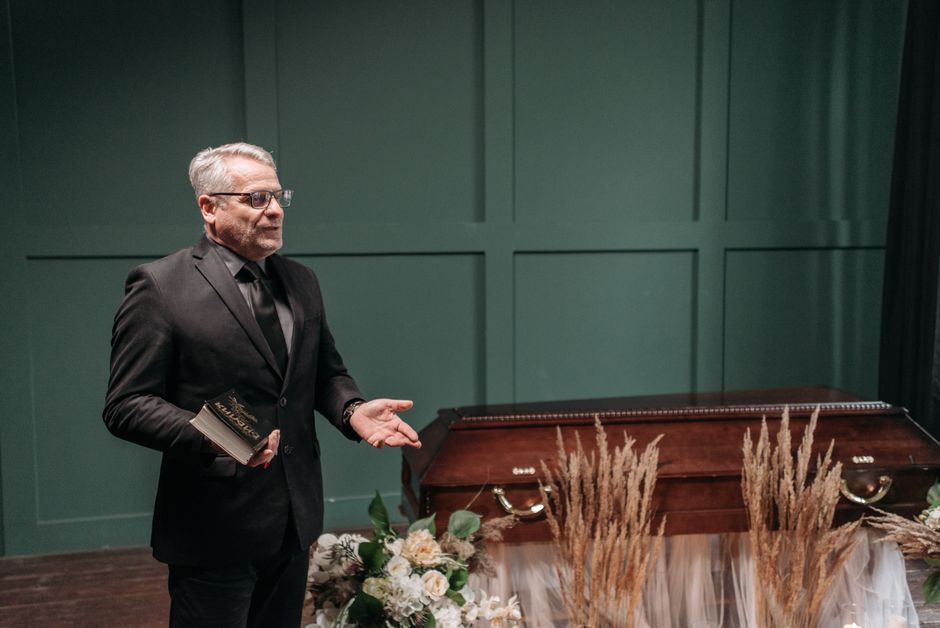
Contact a local funeral director or newspaper with the person’s name, approximate date and connection to Basildon or a nearby town.
Ask local funeral directors and newspapers
Make a focused enquiry
Contact a local funeral director or newspaper with the person’s name, approximate date and connection to Basildon or a nearby town. Explain what you are trying to confirm, such as whether a notice was published or where service details appeared. A focused enquiry is easier to answer than a request to search for an unidentified person.
- Give a name, likely date and local connection when making an enquiry.
- Ask newspapers how to check older print editions.
- Respect privacy limits and avoid assuming a firm handled the arrangements.
If you do not know which funeral director was involved, ask relatives first or look for a firm named in an existing family message. You can also contact local firms with a clear, limited question, but they may not have handled the arrangements and may be unable to identify a family without sufficient details. Respect any privacy limits they explain.
When contacting a newspaper, ask whether it has a searchable notice archive and how older editions can be checked. Give a date range rather than asking staff to search indefinitely, and confirm whether the archive covers print notices as well as online listings. Keep a note of the answer so you can move to another source without repeating the same enquiry.
Use community contacts respectfully
A relative, neighbour, faith community or local organisation may know which newspaper or funeral director handled an announcement. Ask whether they can point you to a public notice or pass a message to the family, rather than requesting private details. This keeps the enquiry considerate and gives the family control over what they share.
Community contacts can also help clarify local connections that search results do not show, such as a familiar name or service venue. Treat what you hear as a lead, not proof: memories can be incomplete, and several people may share a name. Verify any likely notice against its published details before relying on it.
If you are still unsure, explain that you are trying to identify a public notice and share only the details needed for that purpose. Avoid posting personal information or unverified claims in local online groups. A discreet, specific question is more likely to help than a broad public request that could distress relatives or confuse the community.
Check names, dates and locations carefully
Compare identifying details
Before treating a notice as the right one, compare the full name, age or date of death, and places connected with the person. A familiar first name alone is not enough, especially when relatives share a surname or notices use a middle name that you did not expect to see.
- ☐ Compare the full name, including any middle name or initial.
- ☐ Check the age or date of death against what you know.
- ☐ Compare the places named in the notice with family connections.
- ☐ Treat conflicting details as a reason to verify, not guess.
Check whether the notice refers to Basildon, a nearby town, or a place where the person previously lived. Someone may have died elsewhere while remaining closely connected to family, work or community life in the Basildon area, so a different location does not automatically rule out a match.
Look for several details that agree rather than relying on one striking similarity. A matching relative’s name, a familiar town and a consistent date together provide stronger grounds for further checking than a shared surname on its own. If the details still conflict, keep the notice as a possible match rather than treating it as confirmed.
Allow for different wording
Families may choose wording that does not include every detail you expect. A notice could use a nickname, a shortened name or a familiar form of address, while an online listing may display only part of the printed text.
Dates can also be easy to misread: a notice may give the funeral date, the date of death, or both. Read the surrounding wording to understand which event each date describes, and do not assume that a prominent date is the date the person died.
If a likely notice leaves out a detail that would settle your question, use another source to check it. A funeral director or a relative who knew the person may be able to confirm whether the wording refers to the person you are seeking. Avoid sharing an uncertain match as fact while you check.
When family arrangements cross borders

Confirm arrangements directly
When relatives live in different countries, confirm funeral arrangements with the family or the funeral director named in the notice before making plans. Time differences, travel and changes to arrangements can make an old message or copied listing unreliable, even when the notice itself is genuine.
Ask which details are confirmed and whether the family is comfortable sharing them. A notice may invite attendance, request privacy or give instructions about flowers or donations; follow the wording rather than assuming that customary arrangements apply to every family.
If relatives are discussing an overseas payment connected with funeral arrangements, 1 dolar kaç TL can help clarify what a stated dollar amount represents in Turkish lira. Keep that separate from confirming the notice itself: currency conversion cannot establish who the notice concerns or whether a payment request is genuine.
Respect different customs
A family’s customs may shape how a death is announced and how people are invited to pay their respects. Some notices provide detailed service information, while others share only a brief announcement or ask readers to contact relatives privately.
Do not interpret a short notice as a sign that the family does not welcome support. Follow any stated preference, and if the notice does not explain what is appropriate, ask a relative or the funeral director before attending or sending anything.
For relatives who cannot travel to Basildon, ask the family whether there is an appropriate way to remember the person from afar. Avoid forwarding private messages or personal details without permission, particularly when people are coordinating arrangements across several households and time zones.
Share a notice with care
Check before forwarding
Confirm that a notice is public and current before forwarding it to a group chat, community page or social account. A printed or publicly posted notice may be intended for wider circulation, but a message sent privately by a relative is not automatically permission to republish it.
Share the original notice or its publication details when possible, rather than retyping names, dates and service arrangements from memory. This helps readers check the wording themselves and reduces the chance of introducing errors that could confuse people planning to attend.
Pause before adding personal commentary, family details or photographs. Information about a death can be sensitive, and relatives may not have agreed to wider sharing even when the basic announcement is public. If you are unsure, ask the person who provided it or contact a close family member first.
- Check whether the notice is public and up to date.
- Use the original wording or source where possible.
- Ask before adding private details or photographs.
- Correct a mistaken share promptly and discreetly.
Correct errors discreetly
If you discover that a notice you shared contains an error, correct it where you posted it and tell anyone who may have relied on the wrong detail. Keep the correction brief and factual, especially if it concerns a service time, venue or family request.
For an error in the published notice itself, contact the newspaper or funeral director that placed it rather than editing a copy and presenting it as official. They can explain whether a correction or updated notice is possible and how readers should find the accurate information.
Avoid challenging a family publicly over wording or missing details. A private, considerate question is more likely to establish whether something needs correcting without adding distress or drawing attention to information the family chose not to include.
Keep a record of your search

Record useful search details
Keep a simple note of what you have checked so you do not repeat the same search or confuse two possible matches. Record the name as printed, the publication or source, the date you found it and any location or family details that help distinguish the notice.
- Write down the name and any spelling variants you are checking.
- Record the publication, funeral director or other source.
- Mark which details are confirmed and which remain uncertain.
- Return to the source or ask a contact to resolve open questions.
Write down unresolved questions separately from confirmed facts. For example, note that a date appears to be a service date if the wording is unclear, rather than recording it as the date of death. This distinction helps when you later ask a relative, newspaper or funeral director to verify the information.
If you save a screenshot or printed copy, include enough source information to find the notice again. A cropped image without a publication name or date can be difficult to check later, particularly when several notices use similar names or are shared without their original context.
- Note the name exactly as published.
- Record where and when you found the notice.
- Separate confirmed details from open questions.
- Keep the source with any saved copy.
Know when to stop
A search can reach a sensible stopping point when you have checked the likely local sources and confirmed the match through a reliable contact. Not every family publishes a death notice, and some notices may appear only in a particular newspaper or through a funeral director.
If no notice appears, do not take that as proof that the person has not died or that the family is withholding information. Notices are a choice, and a person’s connections may lead you to sources outside Basildon or the nearby towns you first searched.
When the search concerns someone you know, a respectful message to a mutual contact may be more appropriate than repeatedly contacting several relatives. Explain what you are trying to confirm, accept that the family may not wish to discuss arrangements, and avoid pressing for details they have chosen not to share.
Frequently asked questions
Can I find a notice if I do not know the exact date?Yes. Start with the person’s name and the towns where they lived, worked or had close family, then check local newspaper notices and funeral director listings. Try known spelling variations or a middle name if the first search produces no clear match. Keep a note of the sources checked, and ask a relative or community contact to confirm a likely result.
What if several notices have the same name?Compare more than the name. Check any age, date, family names, location and service information included, and consider whether the person had ties to Basildon or a nearby town. If those details do not settle it, do not assume the first result is correct. A close relative or the funeral director associated with the notice may be able to confirm the match.
Are death notices always published in a newspaper?No. Families choose whether and where to publish a notice, so it may appear through a funeral director, a local publication or another channel, or not be published at all. A missing newspaper result does not establish that no notice exists. If you have a connection to the family, ask a mutual contact respectfully or check another likely local source.
How can I check whether funeral details have changed?Use the most recent information from the family, funeral director or publisher rather than relying on an old screenshot or forwarded message. Contact the source named in the notice if details are unclear, and confirm the service date, time and venue before travelling. If you pass an update on, share the corrected information with the people who received the earlier version.
A careful search starts with confirmation
For Basildon residents, the most reliable search combines local newspaper notices, funeral director information and considerate contact with people who knew the deceased. Compare names, dates and places before deciding that a notice is the right one, and treat missing or conflicting details as questions to verify rather than reasons to guess.
Start by writing down the details you already know, then check the most relevant local sources and record what each one confirms. If you find a likely match, confirm current arrangements with the family or the named funeral director before sharing the notice or making plans. That simple final check can prevent confusion and help you respond with care.
Add Basildon Times as a preferred source on Google


